


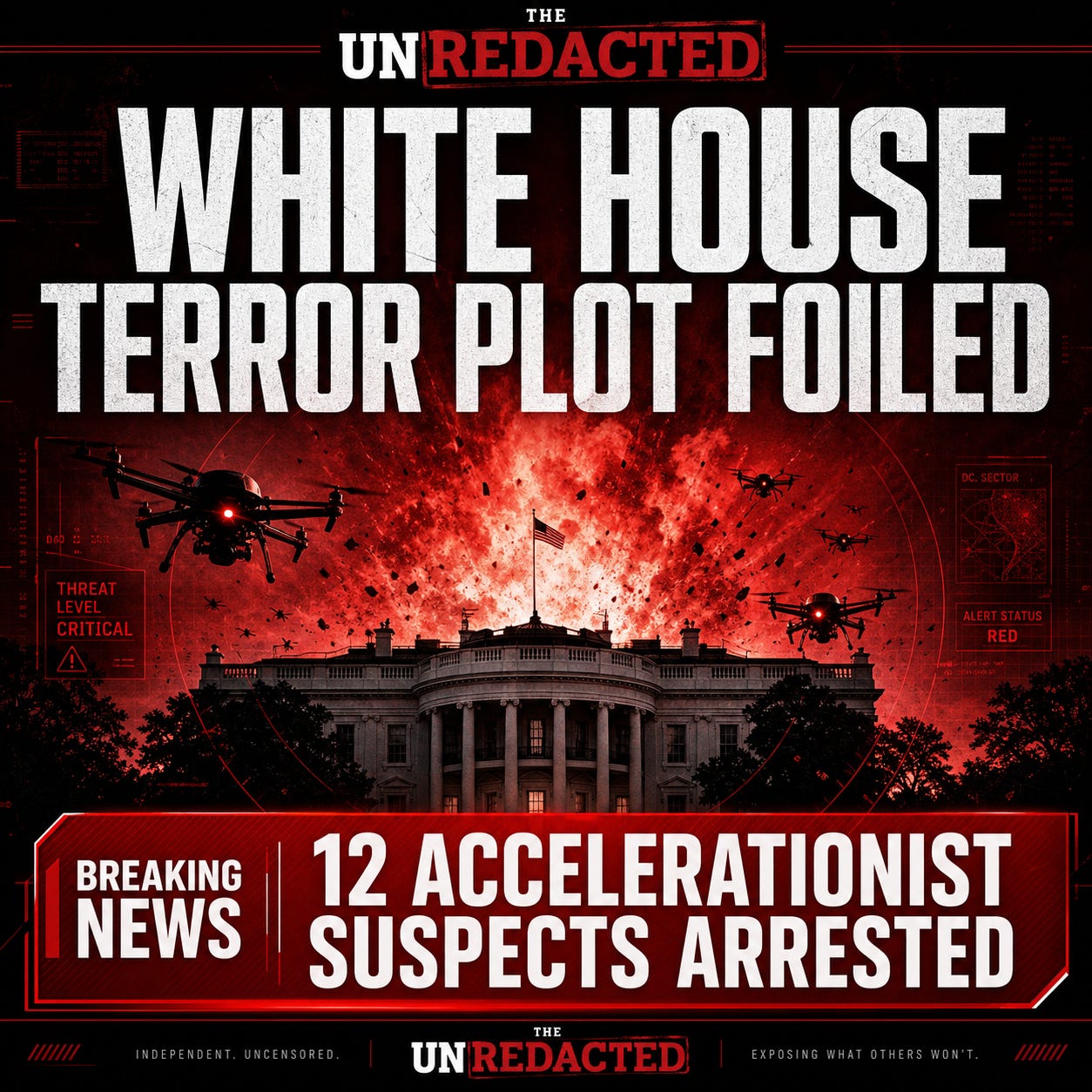
On June 15, the Department of Justice announced charges against five men who had allegedly conspired to carry out a mass casualty attack on the White House South Lawn during the UFC Freedom 250 event the previous Sunday. The charges described a plan that was not crude or impulsive. The conspirators intended to fly explosive-laden drones into the crowd, drive panicked attendees out beyond the White House perimeter where a sniper team would pick them off, and then storm the Executive Mansion and kill several named members of Congress. The FBI became aware of the plot on June 10, four days before the event, after infiltrating a Signal chat the 23-member group was using to coordinate.
The story has received coverage, but not quite the coverage it deserves. What it deserves is more careful thinking about what it actually reveals, which is considerably more than a foiled attack.
Who the Suspects Are
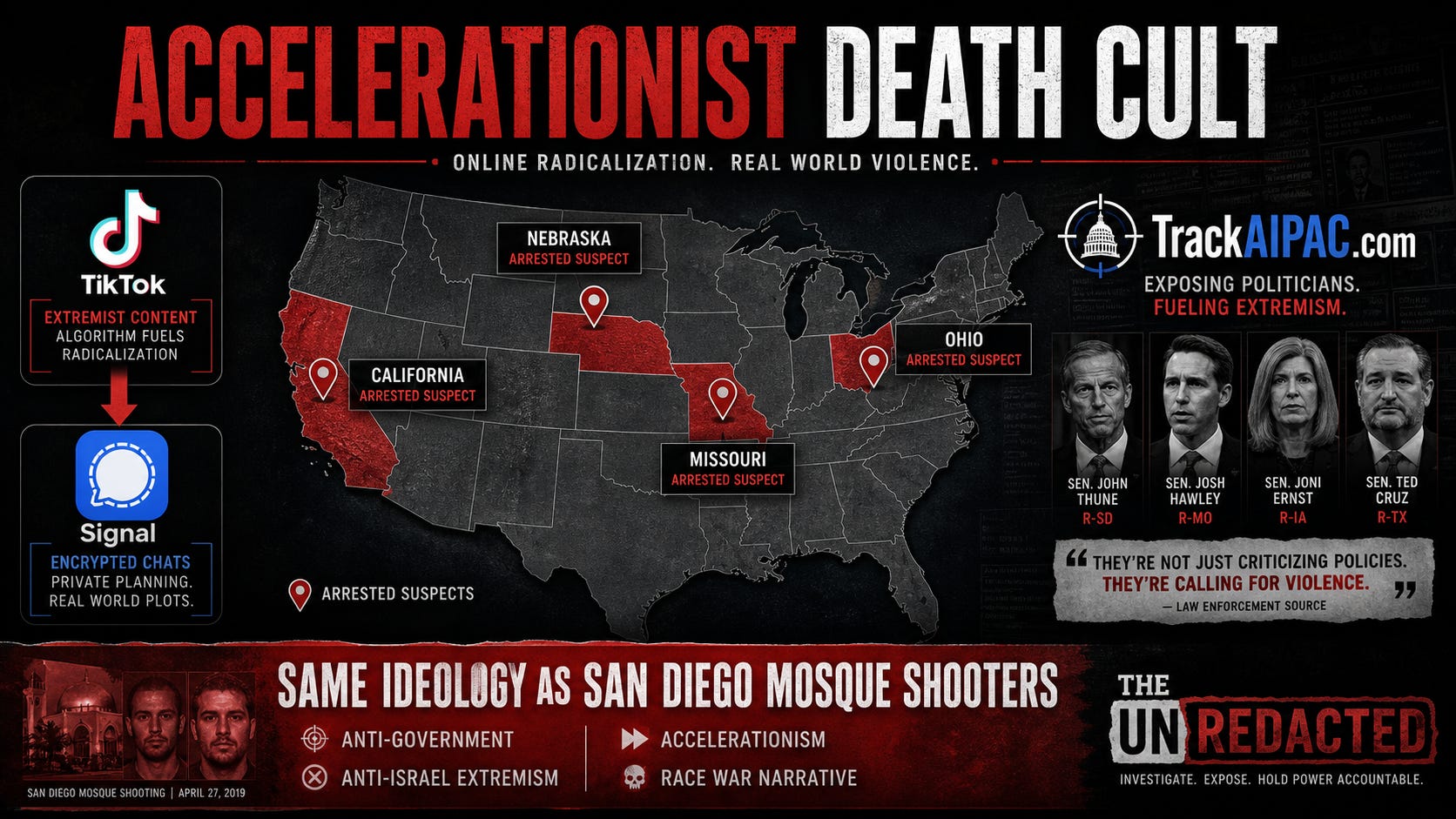
The five men now in federal custody are Tycen C. Proper, 19, of Danville, Ohio; Bryan Omar Roa, 24, of Calimesa, California; Michael Alan Thomas, 32, of Pinon Hills, California; Daniel K. Eskridge, 32, of Kidder, Missouri; and Abraham Hermosillo Alvarez, 31, of Omaha, Nebraska. Thomas and Roa are charged with conspiracy to commit murder. Proper faces the most serious charges: conspiracy, attempted murder of a federal officer, and firearm possession in furtherance of a violent crime. Federal prosecutors say additional search warrants are being prepared and more arrests are possible.
The group is alleged to have subscribed to what court documents and law enforcement sources describe as a far-right “accelerationist” ideology, one they shared in a TikTok group called “Vanguard of the Old” before migrating to Signal and a SimpleX chatroom titled “Vanguard of the Old Republic.” Their stated grievances were eclectic: government corruption, the Epstein files, data centers consuming local water supplies. The eclecticism is itself diagnostic. Accelerationist recruitment does not require a coherent grievance structure. It requires only a generalized conviction that the existing system is irredeemable and that violence is the appropriate response.
The Ideology and Its Genealogy
The term “accelerationism” deserves more than a passing gloss, because its specific content explains the logic of this particular plot in ways that generic “extremism” framing cannot.
Militant accelerationism, as defined by researchers at King’s College London’s International Centre for the Study of Radicalisation, is “a set of tactics and strategies designed to put pressure on and exacerbate latent social divisions, often through violence, thus hastening societal collapse.” Its ideological nucleus is neofascist and white supremacist, but its recruitment surface is deliberately wide. The goal of the violence is not simply to kill; it is to provoke a response from authorities that will radicalize bystanders, ignite racial conflict, and collapse the social order. The Christchurch shooter Brenton Tarrant articulated this logic in his manifesto. So did Atomwaffen Division, the American neo-Nazi terrorist organization founded in 2015 by Brandon Russell on the Iron March forum. Terrorgram, a decentralized network of far-right Telegram channels, functions as a key communications infrastructure for this ecosystem, sharing instructions for hate crimes, mass shootings, and attacks on critical infrastructure.
Proper allegedly confessed to investigators that the group intended to “jumpstart” a revolution, believing American society needed to be “torn down so it could be rebuilt.” Family members told authorities he had expressed sympathy for Adolf Hitler. The language is not improvised. It is a nearly verbatim recitation of the accelerationist canon.
This is not the first such attack in recent weeks. On May 18, Caleb Vazquez, 18, and Cain Clark, 17, shot up the Islamic Center of San Diego, killing three men before dying from self-inflicted gunshot wounds. Their manifesto was titled “The New Crusade: Sons of Tarrant.” Vazquez had been flagged in January 2025 for online behavior that included idolizing mass shooters; authorities confiscated 26 firearms from his father’s home. He found weapons anyway. The Freedom 250 plotters and the San Diego killers are not organizationally connected, as far as current evidence shows. They are, however, ideologically continuous, two data points suggesting an accelerationist moment rather than two isolated incidents.
The Target List and Where It Came From
Here is where the story becomes uncomfortable in ways that extend beyond the conspiracy’s immediate participants.
The plotters drew their target list partly from TrackAIPAC.com, a website that tracks lobbying donations from the American Israel Public Affairs Committee to politicians. The site was co-founded by Cory Archibald and Casey Kennedy, who went public in November 2025. TrackAIPAC has approximately 400,000 followers on X and uses a “red card” visual format to identify politicians who have received pro-Israel lobbying money. According to federal charging documents, one suspect wrote in May: “I got a possible target Marsha Blackburn is senator for Tennessee... she was a target because the Republican had taken money from the Israel pro-Israel lobby and supports them.” The images he was working from came from TrackAIPAC.com.
TrackAIPAC’s founders are not responsible for how a terror cell chose to use their content. That point should be stated plainly and held firmly. But the incident is a clarifying illustration of a dynamic that scholars of Soviet anti-Zionism have spent years documenting in different historical contexts: the way in which language that frames political actors as agents of a foreign power, as instruments of an alien lobby, creates a kind of targeting infrastructure that circulates far beyond the intentions of those who produce it.
Izabella Tabarovsky, whose research on Soviet anti-Zionist propaganda traces exactly this mechanism, has written that anti-Zionist tropes developed by Soviet ideologues are “inextricably linked to antisemitic conspiracy theory, containing seeds of anti-Jewish violence that we ignore at our own peril.” The Soviet apparatus discovered, and the intervening decades have repeatedly confirmed, that a rhetoric of exposure and denunciation, of naming those corrupted by Zionist money and loyalty, does not stay neatly contained within the political context in which it is produced. It travels. It finds readers in other ecosystems, readers who take the logic of the rhetoric and follow it to conclusions its originators did not authorize and perhaps did not anticipate.
The Freedom 250 plot is a case study in exactly that migration. An anti-AIPAC tracking platform, operating within a recognizable tradition of left-adjacent criticism of Israeli lobbying influence, found its visual content repurposed as a kill list by a group of white supremacist accelerationists. The ideological distance between those two points seems enormous. The operational distance, it turned out, was a screenshot.
The Mother Who Noticed
The FBI’s infiltration of the Signal chat was made possible by a tip from Tycen Proper’s mother. She had noticed her son’s recent firearm purchases, his communications with certain online contacts, and overheard him speaking about physical training for “recon” and “hit and run missions.” She told an FBI task force officer that the people her son was talking to online “claimed to be ex-military and Christian based,” and she believed they were using religion to manipulate him. She contacted local police, who escalated to a Joint Terrorism Task Force. Agents who searched Proper’s home found a new shotgun and rifle, plate carriers, tactical clothing, spent cartridge casings, and approximately $3,000 of graduation money converted into ballistic plates, camping gear, and ammunition.
Her decision to make that call is worth dwelling on. The infrastructure of counterterrorism, with its surveillance capabilities and interagency task forces, depended at its most essential point on a mother recognizing that something was wrong with her son and trusting that reporting it would matter. The system’s performance on June 14 was, at its foundation, a function of a single act of civic courage that no algorithm could have replaced.

What the Margin of Four Days Tells Us
The FBI was aware of the threat four days before the event. The event drew 4,300 attendees, including the president, members of Congress, military service members, and international press. The margin between disruption and catastrophe was not the product of systematic early detection. It was the product of one family member’s vigilance and the speed with which a task force moved on her information.
This is not a criticism of the FBI’s performance once it was engaged; by all available accounts, agents acted with speed and effectiveness. It is an observation about the fragility of the system at the point where it most needed to function. Four days is not a buffer. It is an accident of timing.
The Ecosystem That Produces This
The deeper question, the one that tends to get displaced by the immediate drama of arrests and charges, is about the conditions under which 19-year-olds convert graduation gifts into ballistic plates and join Signal chats coordinating mass casualty attacks.
Accelerationist networks have adapted their recruitment precisely to exploit the architecture of mainstream platforms. They begin on TikTok, where algorithmic amplification rewards engagement and where community formation is frictionless. They migrate to Signal and SimpleX when operational security requires it. The “Vanguard of the Old Republic” chatroom was not the beginning of these men’s radicalization. It was a stage in a process that began in publicly accessible digital spaces, among content that, taken in isolation, would not necessarily trigger intervention.
Terrorgram’s network of far-right Telegram channels has been operating this way for years, providing a distributed infrastructure for accelerationist communication that persists across platform bans through sheer decentralization. The San Diego killers met online and coordinated online. The Freedom 250 conspirators met on TikTok and coordinated on Signal. The pattern is not new. The scale of its reach into the lives of ordinary young men in Ohio and Missouri and Nebraska is what is new, or rather what is newly, uncomfortably visible.
FBI Director Kash Patel announced the arrests on X, crediting multistate interagency coordination. The Justice Department charging documents are publicly available. The facts are not in dispute. What remains, and what the coverage has largely declined to pursue, is a reckoning with the ecosystem that produced this cell, and with the ways in which language that travels freely across ideological lines can become operational in contexts its originators neither foresaw nor intended.
Those are not comfortable questions for anyone on any side of the political landscape that generated them. That is precisely why they deserve to be asked.


